

Soft Modernism in a Resale HDB
- Feb 22
- 2 min read
Updated: Feb 24

When we first stepped into this resale HDB flat along Petir Road, the architecture felt rigid, practical, linear, and compartmentalised in the way many resale units are.
Our intention was not to fight it with excessive intervention, but to soften it.
The brief was clear: modern minimalism, but warm. A home that slows the day down.

Designing With Light, Not Just Walls
We began by studying how light moved through the unit. Instead of breaking up the space further, we opened the living and dining areas into one uninterrupted volume. Cream-toned layers were introduced deliberately, not as a single flat shade, but as gradients across walls, cabinets, upholstery, and soft furnishings.
These tonal shifts allow daylight to travel without resistance. Nothing feels abrupt. The eye moves gently across surfaces, and the homeowner feels it — a sense of ease from the moment they step in.

Curved beams subtly articulate the living and dining zones. They are not merely decorative; they act as architectural punctuation. The curves temper the rigidity of the original structure, softening transitions and creating a psychological sense of flow. The space feels composed, but never stiff.

Entry as a Gentle Arrival
The entryway was designed as a quiet decompression point. A built-in shoe cabinet sits flush and restrained, ensuring the first visual impression is calm. Above it, a curved display shelf introduces sculptural softness, a motif repeated throughout the home.
We placed a tall plant here intentionally. Its verticality draws the eye upward, adding height and life against the neutral backdrop. It’s the first subtle reminder that this home breathes.
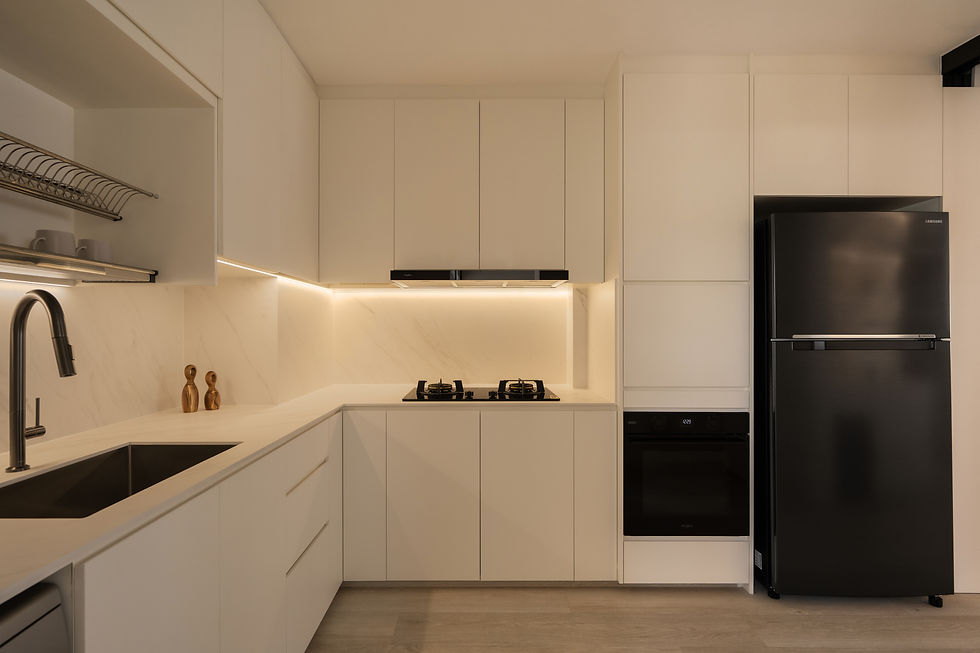
A Kitchen That Blends
In many resale flats, the kitchen becomes visually dominant. Here, we wanted it to recede. The L-shaped layout maximizes efficiency while maintaining openness. Cream matte cabinetry integrates a dishwasher seamlessly, eliminating visual noise.
Inside the pantry, a wine chiller anchors the space, turning it into a quiet indulgence corner.

The Emotional Language of Neutrals
Scandinavian minimalism often leans pale and restrained. We interpreted it through warmth, layered neutrals, tactile fabrics, and light wood flooring that grounds the entire home.
Texture plays a crucial role. Linen upholstery, soft drapery, subtle grain patterns — these tactile elements prevent the palette from feeling sterile. The homeowner described wanting a space that felt “safe” after long days. We translated that into softness, materials that absorb light instead of reflecting it harshly.
Minimalism, in this home, is not about subtraction for its own sake. It is about removing visual clutter so the mind can rest.

Privacy Without Visual Disruption
In the bedroom, concealment becomes part of the design language. A hidden flush door blends seamlessly into grey-toned walls, maintaining uninterrupted surfaces. This discretion keeps the room feeling expansive and calm.

A fluted glass partition separates the dressing table from the sleeping area. It filters light gently, creating a layered depth without fully enclosing the space. The homeowner can move through morning rituals without breaking the room’s serenity.
Every line was considered. Every junction softened.
Ultimately, this home is less about statement and more about atmosphere.

In a fast-paced city like Singapore, especially within the familiar framework of a resale HDB flat, creating emotional stillness requires intention. Through cream-toned layers, sculptural curves, and restrained detailing, we designed a home that feels slower than the world outside.


Comments